This semester one of the mothers put together a curriculum discussion group for families to talk about what they are using for a particular subject, what works, what doesn't. It is a show and tell for us mothers/teachers.
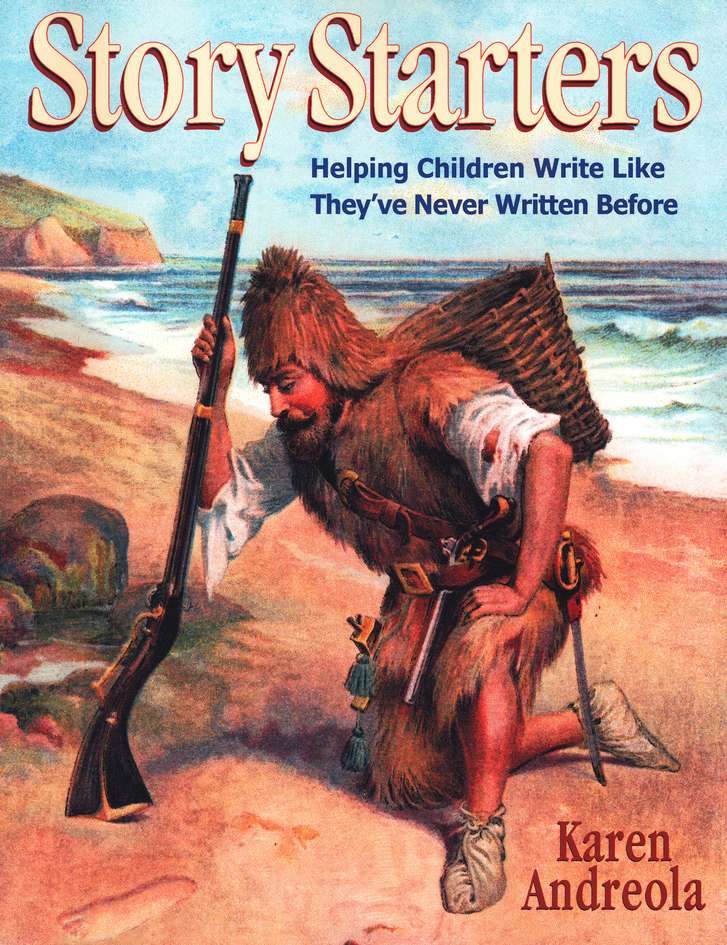
Sometimes I struggle with what I want to write about on this blog. After the discussion group today, it occurred to me to post what WE use for curriculum or for assistance. The topic for today's group was Writing, Grammar and Literature for middle school and high school students. Ironically, what I brought to share was a book called, Story Starters: Helping Children Write Like They've Never Written Before by Karen Andreola. Thank you Mrs. Andreola for helping me over the hump for finding a topic for my blog!
We began by just having him verbally finish the story. It took the pressure of writing off the table, but built the brainstorming process. After a few sessions like this, he learned that he could come up with his own ideas so his confidence was built up enough to put the pencil back into his hand.
At first, he only wrote a paragraph or so. Elaboration would have to come later. Our current hurdle was just making the connection between the idea to then writing it down. I found myself becoming a bit discouraged during this time since I thought that he should progressing faster than what I was seeing, but I could not let that contaminate his thinking. I found something in every story to applaud and kept the critiques small.
I learned that to build on his minimal stories was what we needed to do next. Thankfully, at the end of each half-story is a helpful hint for students to add to their stories by asking questions to delve deeper. We used these hints to add to what he already had written. Re-writing what he already had was not his favorite, so sometimes he could dictate what he wanted to add then I would type it out for him to then read together. From that point, he could critique his own work and began thinking of his own hints to make his story better.
Now he was writing full endings, complete with additional characters or dialogue. He was beginning to edit his own work and add in more color through adjectives and sensory details. I feel like this book has brought us up from a pit of discouragement to having confidence to tackle other types of writing. He still doesn't enjoy writing research papers, but at least now he isn't afraid to try.

No comments:
Post a Comment